
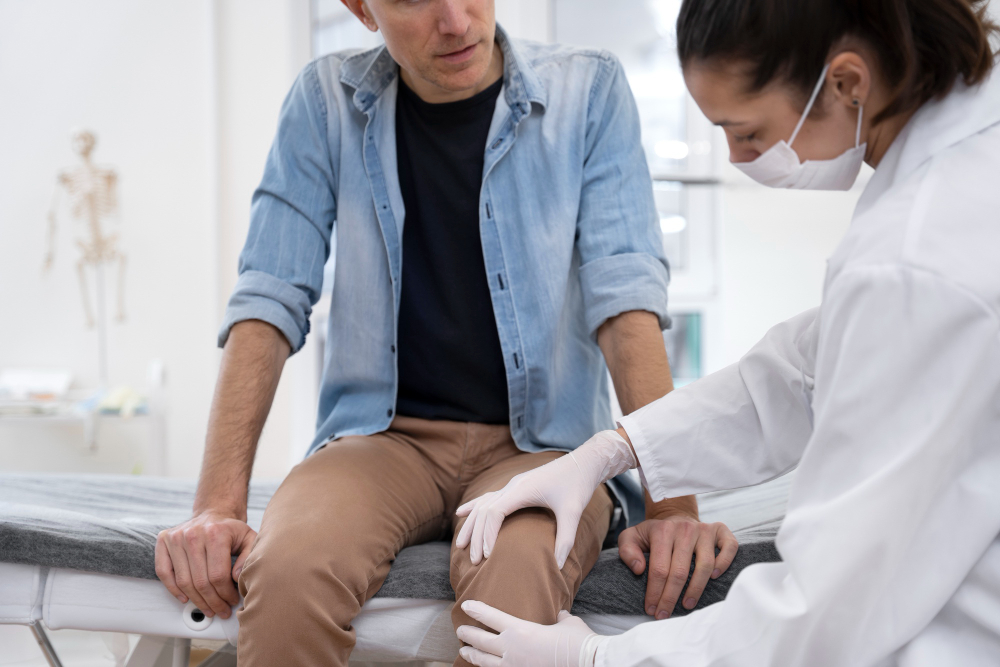
What is Knee Arthroscopy?
Knee arthroscopy is a type of minimally invasive knee surgery. Doctors use it to look inside your knee joint and treat problems. Instead of making a large cut, they use tiny incisions. Through these small openings, a thin camera and special tools are inserted. Because of this, the surgery is less painful and recovery is often faster. Many people choose knee arthroscopy for relief from knee pain and to get back to daily life sooner.
How Does Knee Arthroscopy Work?
During knee arthroscopy, your doctor makes a few tiny incisions around your knee. Next, a small camera called an arthroscope goes into one of the cuts. This camera sends pictures to a screen, so the doctor can see inside your knee. Then, special tools are used through other small cuts to fix any problems. For example, the doctor may remove loose pieces, repair torn tissue, or smooth rough surfaces. Because the cuts are small, there is less damage to healthy tissue.
Common Conditions Treated with Knee Arthroscopy
Knee arthroscopy can help with many knee problems. Some common conditions treated include:
Because this surgery is less invasive, it is often used when other treatments, like rest or medicine, do not help.
Benefits of Tiny Incisions in Knee Surgery
Choosing tiny incisions knee surgery offers many advantages. For instance, you may notice:
Moreover, minimally invasive knee surgery often leads to better movement and quicker healing. According to the American Academy of Orthopaedic Surgeons, most people recover faster with knee arthroscopy than with open surgery.
What to Expect: Procedure, Recovery, and Results
Before surgery, your doctor will explain the steps and answer your questions. Usually, knee arthroscopy is done as an outpatient procedure. This means you can go home the same day. During the surgery, you may get local or general anesthesia to keep you comfortable.
After the procedure, you will rest in a recovery area. Most people can walk with help soon after surgery. However, you may need crutches for a short time. Recovery time depends on your condition and the type of repair done. Many people return to work or school within a few days. Full recovery may take a few weeks, especially if you had a repair.
Physical therapy is often recommended. It helps you regain strength and movement. With proper care, most people enjoy less pain and better knee function after knee arthroscopy.
Risks and Considerations
Although knee arthroscopy is safe, every surgery has some risks. Possible risks include:
Still, these problems are uncommon. Your doctor will discuss your risks and help you decide if this is the right choice for you.
Tips for a Smooth Recovery
To heal well after knee arthroscopy, follow these tips:
Additionally, avoid heavy lifting or sports until your doctor says it is safe. This helps prevent injury and supports healing.
Prevention and Maintaining Knee Health
Even after surgery, it is important to keep your knees healthy. You can protect your knees by:
By taking these steps, you can lower your risk of future knee problems.
Conclusion
Knee arthroscopy with tiny incisions offers big relief for many knee problems. Because it is a minimally invasive knee surgery, recovery is often faster and less painful. If you have knee pain that does not improve, talk to your doctor. Consult an orthopedic specialist to see if knee arthroscopy is right for you.